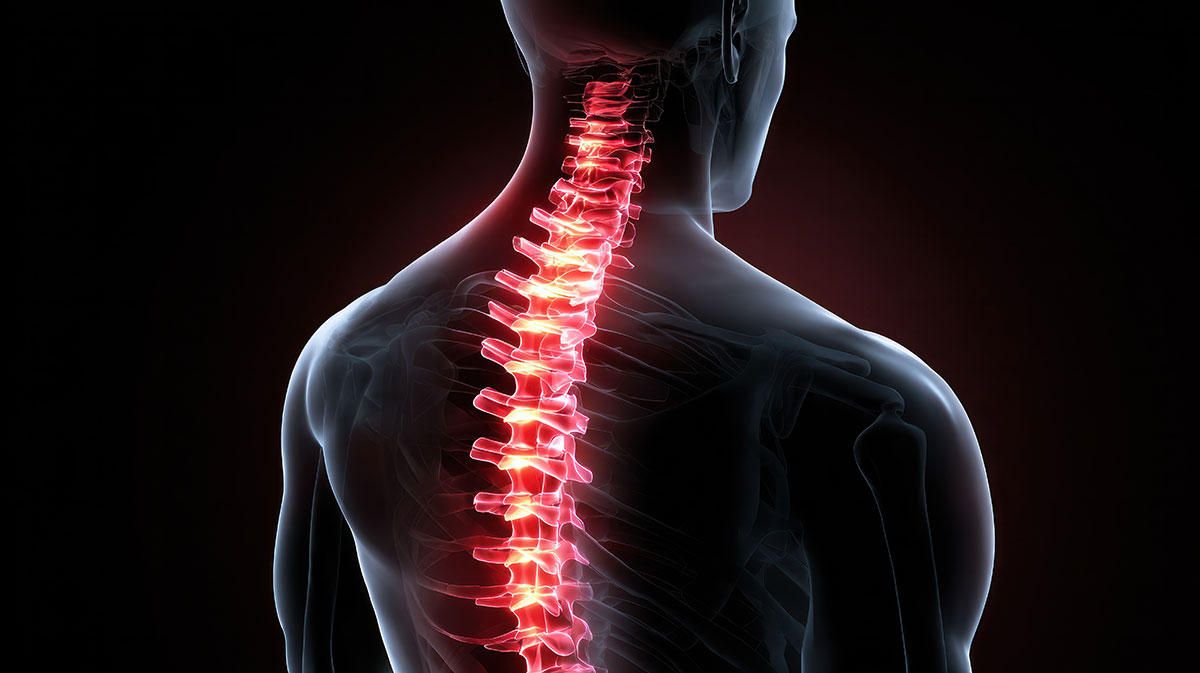
The Truth Behind “Perfect” Alignment
When people hear the term “spine surgery,” they often assume the goal is to make everything perfectly straight and symmetrical. From a textbook perspective, that makes sense. We learn early in training about ideal spinal curves, balanced postures, and textbook alignment goals.
But after years of operating and caring for real people with real lives, I’ve learned that chasing perfect alignment is not always the right answer. In fact, trying to force a patient’s spine into a so-called “ideal” position can sometimes lead to new problems, not solutions.
The best outcomes do not come from correcting to a number. They come from understanding the whole person, how they move, how they feel, and how their body naturally balances itself.
Everyone’s Spine is Different
There is no such thing as a one-size-fits-all spine. We all have unique skeletal structures, muscle tone, movement patterns, and histories of injury or wear. A certain degree of curve in one patient’s spine might be completely normal for them, while in someone else it would be a problem.
That is why I always say, the spine is not a ruler. Straightening it to match an image in a textbook does not guarantee that someone will feel better or move better.
In fact, I have seen cases where aggressive correction led to more discomfort, loss of flexibility, or compensation issues in other parts of the spine. Patients ended up feeling stiff, sore, or even off balance, all because the surgical goal was too focused on alignment rather than function.
The Role of Muscle Balance and Motion
Spine health is not just about bone alignment. Muscles, ligaments, and nerves all play a critical role in how the body moves and maintains balance. When we correct a spine too much or too quickly, we can disrupt the natural muscle patterns that have adapted over time.
For example, a patient who has lived with a certain posture for years may have developed strong compensatory muscle tone to stay upright and mobile. If we “fix” their posture surgically without addressing those muscular adaptations, their body may resist the change or react poorly.
They might develop muscle fatigue, joint pain, or difficulty regaining their balance because their muscles are now working in ways they are not conditioned for. This can slow recovery and even lead to new limitations.
Functional Alignment Over Textbook Alignment
So what is the alternative? I focus on functional alignment. That means aiming for a spinal position that allows the patient to move naturally, stand comfortably, and live without pain, even if it is not perfectly symmetrical.
Functional alignment respects the body’s individual mechanics. It considers where the head sits over the pelvis, how the hips move during walking, and whether the spine supports day-to-day activities like lifting, turning, or climbing stairs.
I use a variety of tools to assess this, including standing X-rays, motion studies, and patient feedback during movement. My goal is to optimize their spine for life, not just for a scan.
Real Case: When Less Correction Was More
A patient in his mid-40s came to me with lower back pain and leg numbness caused by multi-level disk degeneration. Another surgeon had recommended an aggressive spinal realignment procedure to fully restore the curvature of his lower spine.
When we reviewed his case, we saw that his muscular structure had adapted well to a mild flattening of the lumbar curve. He was active, lean, strong, and had lived that way for years.
Rather than performing a full correction, we opted for a targeted decompression and motion-preserving disk replacement that restored function without forcing his spine into a new shape.
The result? He recovered quickly, kept his natural movement patterns, and avoided the stiffness that might have followed a more invasive approach.
Collaboration with Therapy Matters
One of the reasons I value functional outcomes over cosmetic alignment is because recovery does not stop in the OR. Patients spend weeks and months building strength and coordination in physical therapy.
When surgeons and therapists work together to support real-world movement goals, the patient wins. We can track how the body responds to surgery, monitor posture and gait, and adjust rehab plans based on how the patient is actually moving, not just how they look on imaging.
Therapists often help reinforce functional balance by retraining muscles, improving core stability, and gradually introducing movement challenges. This is where the true healing happens.
Respecting the Body’s History and Future
Overcorrection can be tempting. We all want to give patients the “best-looking” spine possible. But when we look deeper, we realize that the best outcome is one that works with the body’s history and plans for its future.
Every spine has a story. Injuries, work habits, sports, surgeries, and genetics all shape the way a spine evolves. When we plan surgery, we need to consider that story and avoid erasing it in favor of something that looks perfect on paper.
In younger or highly active patients, we want to preserve as much natural motion as possible. In older patients, we focus more on comfort and balance. Either way, the goal should always be long-term quality of life, not just visual symmetry.
Alignment is a Tool, Not the Goal
At the end of the day, alignment is just one part of a larger plan. It is a tool we use to support better movement, reduce pain, and improve function. But it is not the goal itself.
The real goal is helping patients live their lives, fully, actively, and comfortably. That sometimes means leaving small imperfections untouched or prioritizing motion over structure.
Because when it comes to the spine, balance matters more than perfection. And the smartest surgery is the one that listens to the patient’s body instead of just the blueprint.